Our Blog

Keeping It Clean—Better for Your Retainer, Better for Your Oral Health!

October 19th, 2022

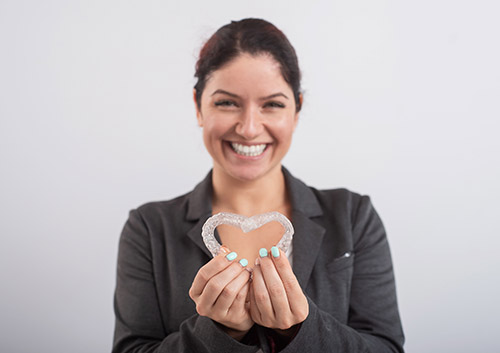
Now that you’ve graduated from your braces or aligners, you might think you’re finished with orthodontic cleaning tips. Not quite yet! Your retainer needs love, too—not just because it can look or smell “less than appealing” without your help, but because it’s good for your dental health.

Removable Retainers

If you have a Hawley retainer or a clear retainer, cleaning it whenever you remove it is a great idea. Unappetizing white patches mean plaque or mineral deposits from your saliva have dried and hardened on your retainer’s surface. And if you notice an unpleasant taste or odor, it probably means that germs and bacteria have made themselves at home and are growing in and on your appliance.

You don’t want old plaque or new bacteria in your mouth! Here are some ways to keep your retainer clean and fresh:

  • After wearing it, you can clean your retainer with a toothbrush, but don’t brush too vigorously. You might scratch it. Use a soft or even extra-soft brush to clean out all the nooks and crannies, and then rinse.
  • Use cleaning products which have been recommended by Dr. Quas, Dr. Wiater and Dr. Kang if your retainer needs a deeper clean. Denture cleaners, retainer cleaners, and even toothpastes can be too abrasive or cause discoloration, so use the products made for your specific retainer.
  • Let your retainer dry before storing it in a dry place after cleaning. Shutting a damp retainer into a closed case provides bacteria with the damp, dark environment they thrive in. (PS—clean your case regularly, too!)
  • One of the benefits of a clear retainer is that it’s almost invisible. And you can help keep it that way by removing it whenever you eat or drink. Your retainer can become stained from colored foods or liquids.

Fixed Retainers

A permanent retainer is a small piece of wire that is custom-fit and bonded to the inside of selected teeth to keep them from shifting. Because food particles and plaque can accumulate around a fixed retainer, brushing after meals and at least twice a day is recommended. Bacteria and plaque cause bad breath, cavities, and tartar buildup, and removing tartar might require removing your retainer.

While a fixed retainer can be tricky to clean, there are techniques and products that make cleaning easier and more effective:

  • An orthodontic toothbrush with a smaller head might reach behind your teeth more comfortably.
  • Don’t forget to floss! Using a floss threader will help you get that wriggly floss behind the retainer and between your teeth.
  • Try a water flosser. These handy devices direct a stream of water right into hard-to-reach places for more thorough cleaning.

If you’re having trouble keeping your retainer clean, our Bend, Redmond, Prineville, La Pine or Sisters OR orthodontic team can teach you all you need to know about tools and techniques to keep your retainer—and your teeth and gums—healthy. An attractive smile is a great thing. A healthy, attractive smile is even better!

Retainer Hacks

October 12th, 2022

Even with the best of care, accidents can happen, and your retainer, unfortunately, is not immune. Of course, you need to visit our Bend, Redmond, Prineville, La Pine or Sisters OR office ASAP if your retainer is damaged, but, in the meantime, there are some strategies you can use to help your teeth—and your retainer—stay as healthy as possible while you wait.

For Removable Retainers

  • When you notice any damage to your removable retainer—remove it.

Don’t wear a damaged retainer, especially overnight. You don’t want to damage it further, and you do want to avoid the possibility of choking if a retainer breaks while you’re sleeping. Dr. Quas, Dr. Wiater and Dr. Kang and our orthodontic team are experts when it comes to deciding if your retainer is wearable, so always consult an expert before putting a suspect retainer back in your mouth.

  • Damaged Hawley retainer?

If you have a Hawley retainer—the traditional wire retainer—here’s some good news: a Hawley retainer can often be repaired if it’s not damaged too badly. Don’t try to fix your retainer yourself, and bring it into our office as soon as possible to see if it’s fixable.

  • Damaged clear retainer?

If you have a clear retainer, let’s start with the bad news: A clear retainer is not a repairable retainer. Cracks, breaks, warping—these injuries mean that a new retainer is in your future.

The good news is that materials for plastic retainers are available that are more durable than ever. This might be a good option for you to check out, especially if you suffer from bruxism, or tooth grinding, which can be very hard on clear retainers.

  • When you’ve just finished treatment with clear aligners . . .

It’s worth asking if your last tray can sub for your retainer until you have it repaired or replaced.

  • Ask us about over-the-counter mouthguards.

While you wait for a retainer repair/replacement, your teeth are at risk of shifting out of alignment. A customizable OTC mouthguard might reduce the chance of shifting, although it’s definitely not a long-term solution! We can let you know if this temporary fix is worth it.

For Fixed Retainers

If the wire retainer bonded to your teeth becomes loose, or if you notice your teeth shifting, you might need a repair or a replacement. This is a job for us. In the meantime,

  • When you have a broken wire . . .

If a broken wire is causing discomfort, check to see if you should flatten it or cover the wire tip with dental wax to protect soft tissues. Warm water rinses can ease irritation.

  • When your wire is broken or loose . . .

Stay away from chewy, sticky, and crunchy foods. You should be doing this anyway with a fixed retainer to keep it from becoming detached—and if it’s already loose, no need to make it more so!

  • Ask us about over-the-counter mouthguards.

Check to see if an OTC, customizable mouthguard is a good idea to keep your teeth from shifting if you can’t visit The Brace Place right away.

We started off by saying that accidents can happen even with the best of care. So you can imagine what can happen without the best of care. Keep your retainer in its case, keep it away from heat, don’t eat foods that can harm your retainer—all the precautions that make accidents unlikely to happen.

But if something awful befalls your retainer, call our Bend, Redmond, Prineville, La Pine or Sisters OR office right away. Why aren’t we suggesting ways to fix your broken retainer with the supplies you have in your home toolbox? Because the best life hack of all for someone with a damaged retainer is to leave the fixing to a dental professional.

Help! My gums hurt when I floss!

October 5th, 2022

By no stretch is it rare for your gums to hurt during and after flossing. Even some bleeding is to be expected. This is especially true if you have not flossed in a long time. However, if your gums do indeed hurt when you floss, and unbearably so, there are some things you can do.

Be Gentle

Perhaps the most obvious way to combat gum soreness and bleeding is to be gentle. One of the most common occurrences of these gum problems is over-aggressive flossing. In other words, if you are too rough on your gums while flossing, either because you are out of practice or because you are in a hurry, soreness and hurting is to be expected. Instead, try taking your time and be gentle. Also, if you are just starting out, be patient and consistent, your gums will become more conditioned over time.

Use an Alternative Method

If being consistent and gentle does not work, there are other alternative methods of flossing that you can try. You can also try a water floss machine, or what is sometimes called a water pick. The device essentially shoots water into the crevasses between your teeth, and in other areas of your mouth, in order to dislodge food and plaque. These oral instruments also come with different attachments that allow you to reach many of the hard to see and reach areas of your mouth. And lastly, you can always buy floss that is not as abrasive to your gums. There is floss that comes with soft and gentle coatings that will do less harm to your gums while they are adjusting to the good oral hygiene habit you are creating.

Flossing is one of the easiest parts of oral hygiene to overlook. When you first start out, it is common that you may want to stop because of the pain it can initially cause. However, if you try one, or all, of the above mentioned methods, you will give yourself the best chance of being success with your flossing, and it won't hurt as much.

For more flossing tips, schedule an appointment at our Bend, Redmond, Prineville, La Pine or Sisters OR office and askDr. Quas, Dr. Wiater and Dr. Kang or a member of our team!

Overbite Overview

September 28th, 2022

An overbite is one of the most common malocclusions. If Dr. Quas, Dr. Wiater and Dr. Kang and our team have diagnosed you with an overbite, you probably have lots of questions. Let’s try to answer some of them!

Just what is an “overbite”?

A malocclusion is another way of saying that you have a problem with your bite, which is the way your jaws and teeth fit together when you bite down. In a healthy bite, the front top teeth project slightly beyond, and slightly overlap, the bottom teeth. A normal overlap is generally considered one or two millimeters.

An overbite is a Class II malocclusion, and means that the upper front teeth cover more of the lower teeth than they should. But that’s a very general definition, and we will diagnose and treat your own, very specific, bite and teeth alignment.

Because overbites aren’t all alike. They might be barely noticeable. Upper teeth might overlap lowers by an extra millimeter or two. In more severe overbites, the upper teeth might cover the lower teeth completely. The amount of overlap and the cause of the overbite will determine your treatment.

What causes an overbite?

Overbites can be dental, caused by tooth alignment, or skeletal, caused by bone development, or a combination of both. They are usually hereditary, so, most often, an overbite is something you’re born with.

The size and position of your jaws, the shape and position of your teeth, all affect your bite alignment. But early oral habits, such as prolonged and vigorous thumb-sucking or pacifier use can contribute to overbite development. Missing teeth and bruxism, or tooth grinding, can also affect the alignment of your bite.

How do we treat an overbite?

There are many types of treatment available. Dr. Quas, Dr. Wiater and Dr. Kang will recommend a treatment plan based on the type and severity of your overbite. Because some treatments are effective while bones are still growing, your age plays a part as well.

  • Braces and Aligners

If dental issues are the main reason for your overbite, braces or clear aligners can be very effective. Rubber bands are commonly used to help bring teeth and jaw into alignment.

  • Functional Appliances

If the overbite is caused by a problem with upper and lower jaw development, devices called functional appliances can be used to help guide the growth of the jawbones while a child’s bones are still forming.

For young patients, there are several appliances that can help correct an overbite. Some, like the Herbst appliance, work inside the mouth, while others, like headgear, are worn externally. Your orthodontist will recommend the most effective appliance for your needs.

  • Surgical treatment

In some cases, where the problem is skeletal rather than dental, surgical treatment might be necessary to reshape the jawbone itself. This is especially true for adults, whose bones have finished forming.

If we recommend surgery, oral and maxillofacial surgeons are experts in surgical procedures designed to create a healthy and symmetrical jaw alignment. Dr. Quas, Dr. Wiater and Dr. Kang will work with your surgeon to design a treatment plan, which will usually include braces or other appliances following surgery.

Why treat your overbite?

Sometimes, a very slight overbite won’t require treatment. A serious, moderate, or even mild overbite, though, can lead to many dental and medical problems, including:

  • Crooked, crowded teeth
  • Worn teeth and enamel
  • Problems speaking or chewing
  • Difficulty sleeping
  • Headaches, facial, and temporomandibular (jaw) joint pain

When you work with our Bend, Redmond, Prineville, La Pine or Sisters OR team to correct your overbite, you’ll not only prevent these unpleasant consequences, but you’ll achieve major benefits as well—a healthy, comfortable bite, and an attractive, confident smile. If you’d like more than an overbite overview, Dr. Quas, Dr. Wiater and Dr. Kang can provide the specific information and treatment plan you need to make that healthy bite and that confident smile a reality!  

doctor and happy patient

“I just really appreciate everyone here and the kindness you've shown to our girls. I know their parents would be so happy to know they get such great care. The doctors always go way out of their way to help us every time.”~ Allison

“We just love it here! The honesty is great. I love that we don't feel taken advantage of, which unfortunately we have been elsewhere. You have a great staff and we think the best of you! Keep up the good work. The doctors are always wonderful and never rushed, which I love!”~ The Goff Fmamily

“I may not have been to other orthodontists, but from what I hear from my friends and family, The Brace Place seems the best. Every time you walk in you are greeted with a smile, shich always starts your day off right. Couldn't ask for a better staff!”~ Diane E.

Read More
Invisalign iTero American Association of Orthodontists Pacific Coast Society of Orthodontists Cenral Oregon Dental Society